07 Jul
Surviving High-Temperature Construction: Thermal Stability of Amino Acid Gypsum Retarders
In Southern and Central Europe, summer construction frequently faces extreme environmental conditions. When ambient temperatures exceed 35°C, or when formulating industrial dry-mix mortars using warm, freshly calcined Flue-Gas Desulfurization (FGD) gypsum, standard chemical admixtures face severe operational stress.
For high-volume applications like machine-applied wall plasters and joint compounds, thermal stress accelerates the dissolution kinetics of calcium sulfate hemihydrate (CaSO4⋅0.5H2O). This rapid reaction leads to premature flash setting, clogged mixing pumps, and structural cracking.
While adding traditional retarders can delay this reaction under standard laboratory conditions (20°C), their efficiency often drops sharply when exposed to high heat. This guide explores the thermal degradation pathways of conventional retarders and highlights why advanced amino acid technology serves as a reliable solution for high-temperature construction.
1. The Vulnerability of Traditional Additives to Thermal Kinetic Stress
To maintain an open time of 60 to 90 minutes in hot weather, a retarder must remain structurally intact. Traditional organic molecules often undergo severe kinetic breakdown when exposed to prolonged thermal loads:
Citric Acid and Tartaric Acid: These carboxylic structures are highly sensitive to temperature variations. As temperatures rise, their binding constants with calcium ions drop sharply, and their adsorption behavior shifts. This instability causes the open time to decrease unpredictably, leaving building crews with a dangerously short application window.
Standard Protein Hydrolysates: Produced via the rough degradation of animal by-products (such as hooves or horns), these low-end polymers break down further when exposed to combination of heat and alkalinity. This structural collapse destroys their retarding capability and releases volatile ammonia gas, generating strong organic odors on the job site.
2. The Thermal Stability of Synthesized Amino Acid Structures
Advanced synthesized amino acid retarders feature a highly stable molecular structure designed to resist heat-induced breakdown. Built with strong, heat-resistant carbon-nitrogen bonds, these molecules maintain their structural integrity at temperatures exceeding 80°C.
[Traditional Organic Acids]  ──> High Heat ──> Molecular Breakdown  ──> Flash Set (Failure)
[Synthesized Amino Acids]    ──> High Heat ──> Structurally Intact ──> Linear, Controlled Set
Mechanism of Heat Resistance
Unlike additives that rely on non-selective adsorption or weak surface binding, advanced amino acids form a stable, temporary protective layer on the hemihydrate crystals.
Even when high temperatures accelerate ion movement in the mixing water, this specialized layer regulates the release of calcium (Ca2+) and sulfate (SO42−) ions. This precise control ensures a linear, predictable setting curve, preventing the sudden hydration spikes common in summer construction.
3. Supply Chain Reliability and R&D: Yuanlian Chemical
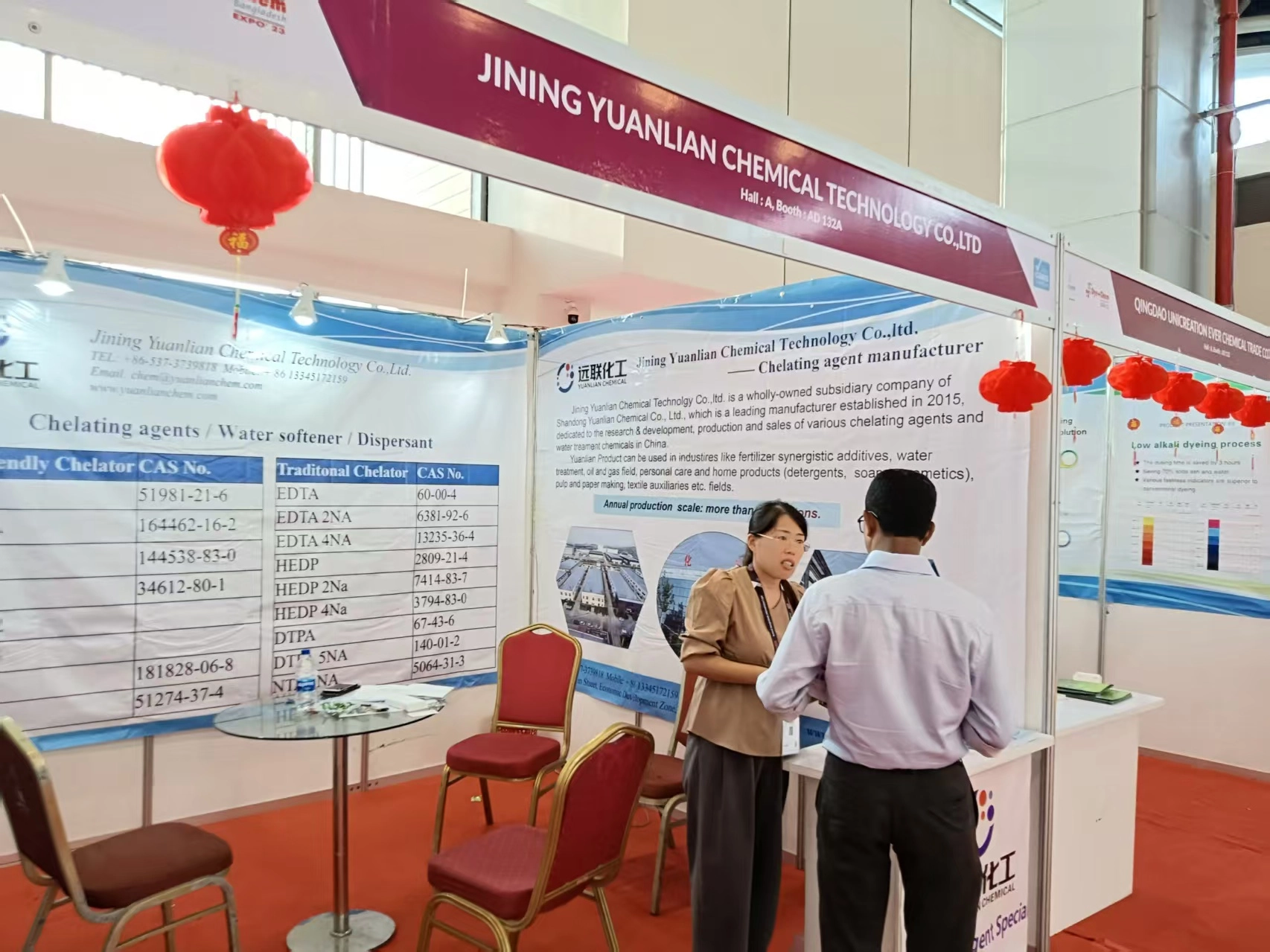
For cross-border dry-mix producers serving the European construction market, sourcing resilient admixtures requires a partner with proven technical expertise. Yuanlian Chemical, an established manufacturer specializing in high-purity, biodegradable additives, supports the industry with a reliable infrastructure optimized for demanding environmental conditions:
Thermal Simulation R&D: Yuanlian Chemical operates advanced laboratory testing facilities where gypsum hydration is analyzed using multi-channel microcalorimetry at elevated temperatures (35°C to 60°C). This data ensures that their amino acid retarders deliver consistent performance in hot-weather applications.
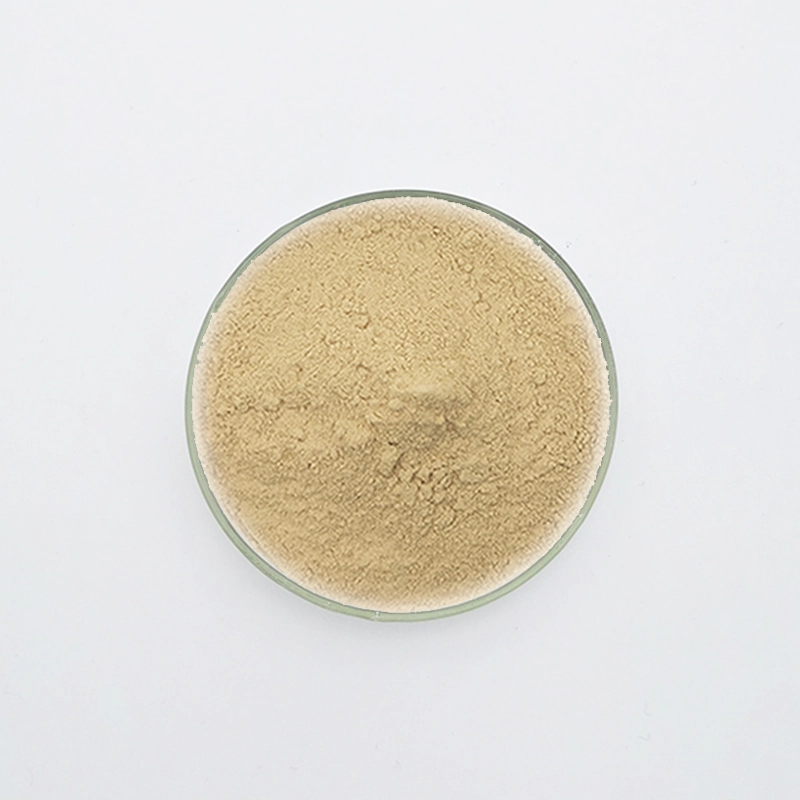
High-Purity Synthesis: Using advanced, automated production lines, the company removes volatile impurities and unreacted intermediates. This precise manufacturing delivers a high-purity, stable powder that remains odorless even when mixed with alkaline materials in confined indoor spaces.
Consistent Export Logistics: Operating with reliable manufacturing capacities, Yuanlian Chemical provides stable supply lines to international ports, ensuring dry-mix blenders receive uniform active content from batch to batch.
4. Technical Performance Matrix under Thermal Stress
Evaluating retarder performance under high-temperature conditions underscores the advantages of specialized amino acid technology over traditional alternatives:
| Performance Metric | Citric Acid (at 38°C) | Unmodified Protein (at 38°C) | Yuanlian Amino Acid Retarder (at 38°C) |
|---|---|---|---|
| Open Time Retardation | Shortened by 40–50%; unpredictable | Shortened by 20–30%; unstable | Retains >90% of target open time; linear |
| Compressive Strength Retained | Severe reduction (20–30% loss) | Moderate reduction (10–15% loss) | Excellent retention (<5% structural loss) |
| Odor Development | None (but causes surface skinning) | Strong ammonia emissions | Completely odorless and VOC compliant |
| Dosage Sensitivity | High (minor errors cause flash setting) | Moderate (susceptible to pH shifts) | Low (highly stable, predictable curves) |
5. Strategic Formulation Benefits
Integrating heat-stable amino acid retarders into commercial dry-mix lines provides key technical advantages for high-temperature building applications:
Seamless Multi-Component Integration
Thermal stress often alters how thickeners and water-retention agents behave. Advanced amino acid powders exhibit no surface activity, meaning they do not compete with Hydroxypropyl Methylcellulose (HPMC) or polycarboxylate ether (PCE) superplasticizers, keeping the mortar's water retention and flow properties stable.
Uniform Crystal Growth and Surface Integrity
By maintaining a stable hydration rate under high temperatures, the final calcium sulfate dihydrate (CaSO4⋅2H2O) crystals interlock into a dense, needle-like matrix. This prevents surface chalking, map cracking, and shrinkage defects, ensuring the finished plaster fully complies with EN 13279 strength standards.
Environmental Regulatory Alignment
Free of chlorides and readily biodegradable according to OECD guidelines, these additives allow finished dry-mix products to satisfy demanding environmental and indoor air-quality criteria across Europe.
6. Conclusion
Successfully executing high-temperature construction projects requires switching from temperature-sensitive organic acids to advanced chemical additives. Utilizing heat-stable amino acid retarders allows dry-mix manufacturers to maintain stable open times and ensure excellent surface finishes during hot-weather applications. Supported by the specialized manufacturing, rigorous thermal R&D, and responsive technical services of partners like Yuanlian Chemical, construction professionals can deliver high-strength, durable gypsum installations that reliably withstand extreme environmental conditions.
Latest News

Need help
Prefer speaking with a human to filling out a form? call corporate office and we will connect you with a team member who can help.