The European automatic dishwashing detergent (ADWD) market is undergoing a significant technical transition. Consumer demand for shorter, low-temperature eco-cycles (45°C to 50°C), combined with the strict phosphorus limits enforced by the EU Detergents Regulation (Regulation EC No 648/2004), has altered modern formulation science.
In many parts of Europe—ranging from the chalky aquifers of Southern England to the limestone-heavy regions of Central Europe—tap water contains high levels of permanent hardness. Without a high-performance builder, the combination of thermal stress, alkaline builders, and hard water minerals triggers a common defect: hard water filming. This manifests as an unsightly, stubborn white film of calcium carbonate (CaCO3) and calcium phosphate deposited across glassware and stainless steel surfaces.
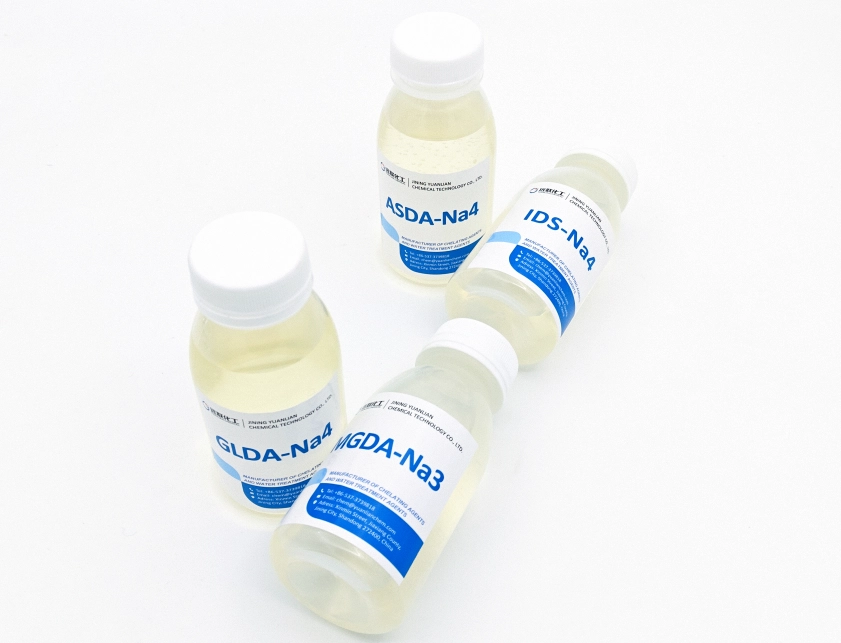
To eliminate this filming while complying with EU Ecolabel criteria, formulation chemists are replacing traditional builders with Trisodium Methylglycine Diacetic Acid (MGDA-Na3). This technical guide examines the complexation kinetics of MGDA-Na3 and its role in modern phosphate-free dishwashing formulations.
1. The Chemistry of Spotting and Filming in ADW Cycles
Understanding the distinct mechanisms of structural spotting and filming is essential for designing an effective dishwashing system:
- Spotting (Discrete Droplet Precipitation): Occurs during the drying phase when isolated water droplets evaporate from the substrate, leaving behind concentric rings of concentrated mineral salts.
- Filming (Continuous Surface Precipitation): Occurs dynamically during the main wash and rinse cycles. As the temperature rises, the solubility of calcium carbonate decreases rapidly.
In phosphate-free tabs that rely on sodium carbonate (soda ash) as a primary alkaline builder, the concentration of free carbonate ions (CO32-) peaks precisely during the main wash. If the chelating agent exhibits slow complexation kinetics, calcium ions (Ca2+) will preferentially bind with the carbonate ions, triggering rapid crystal growth on glass surfaces.
2. MGDA-Na3 Complexation Kinetics and Thermodynamic Advantages
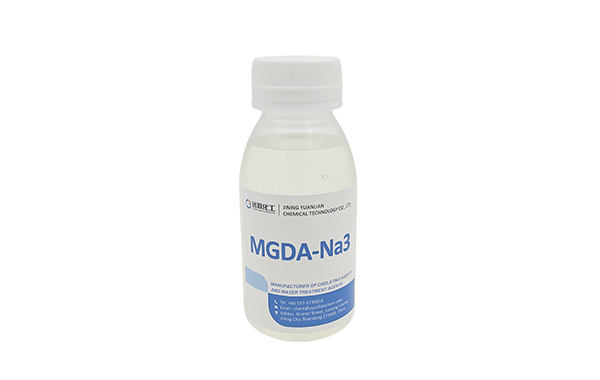
Trisodium MGDA is a small, highly mobile aminopolycarboxylate molecule. Its structural layout allows for rapid spatial reorientation, enabling it to capture divalent metal ions far more quickly than larger, sterically hindered polymers.
[Rapid Wash Cycle Begins] ──> Instant MGDA-Na3 Dissolution ──> High-Velocity Ca2+ Capture │(Prevents CaCO3 Nucleation on GlassStability Constant Dynamics
The thermodynamic performance of a builder is measured by its conditional stability constant (log K). MGDA-Na3 exhibits a strong affinity for calcium ions (log K ≈ 7.0), maintaining a stable complex across the standard ADW working range of pH 9.5 to 11.5.
Crucially, its kinetic adaptation rate remains high even in cold-start water conditions, ensuring that mineral ions are safely sequestered before the heating elements trigger scale nucleation.
Crystal Distortional Effects
Even at sub-stoichiometric thresholds (under-dosing scenarios), MGDA-Na3 exerts a powerful threshold effect. The molecule adsorbs directly onto the active growth sites of embryonic calcium carbonate micro-crystals. This action distorts the crystal lattice, changing it from a sticky, calcified calcite structure into a loose, non-adherent aragonite form that is easily flushed away during the drain cycle.
3. Supply Chain Integrity and Manufacturing Standards: Yuanlian Chemical
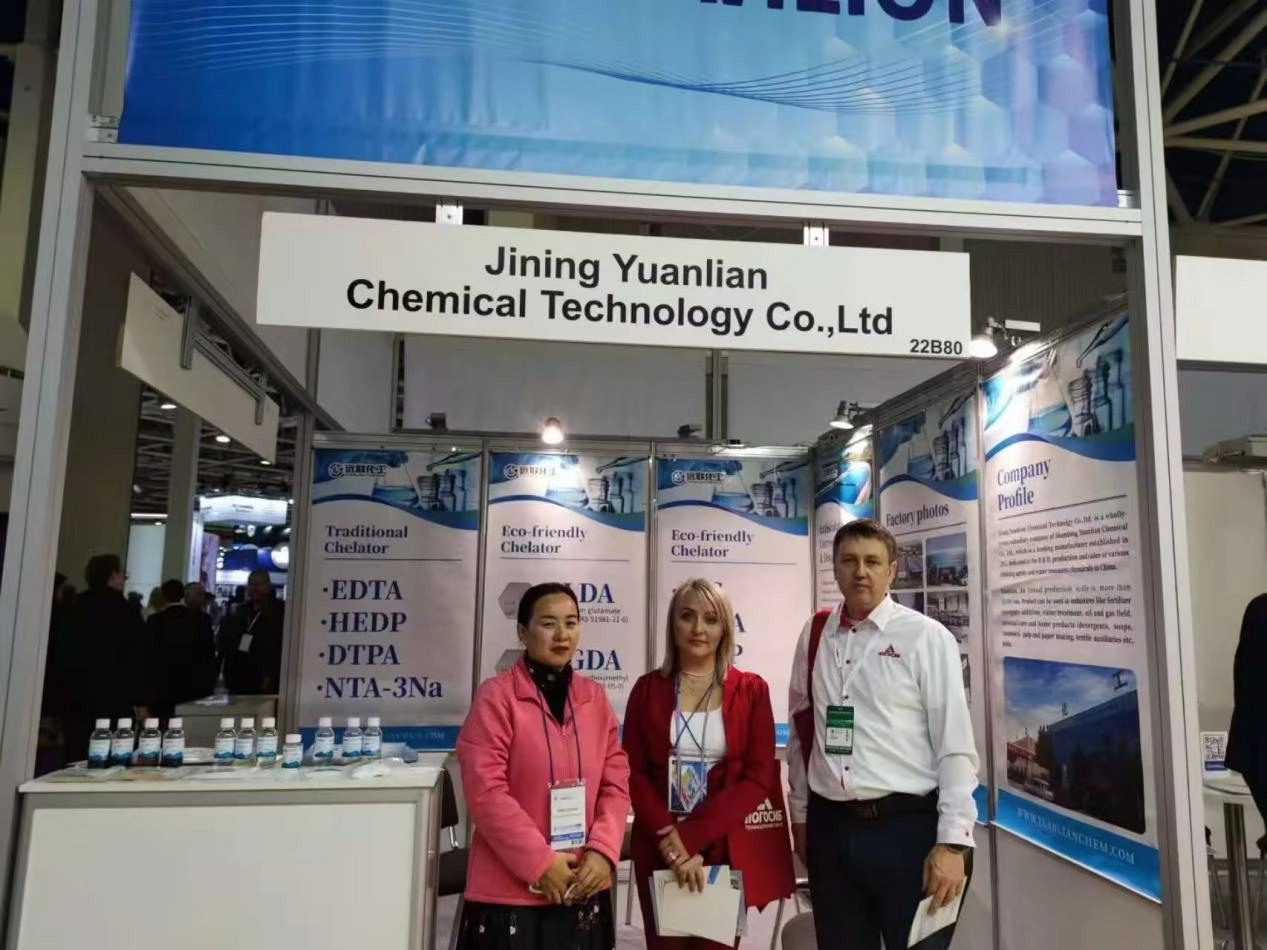
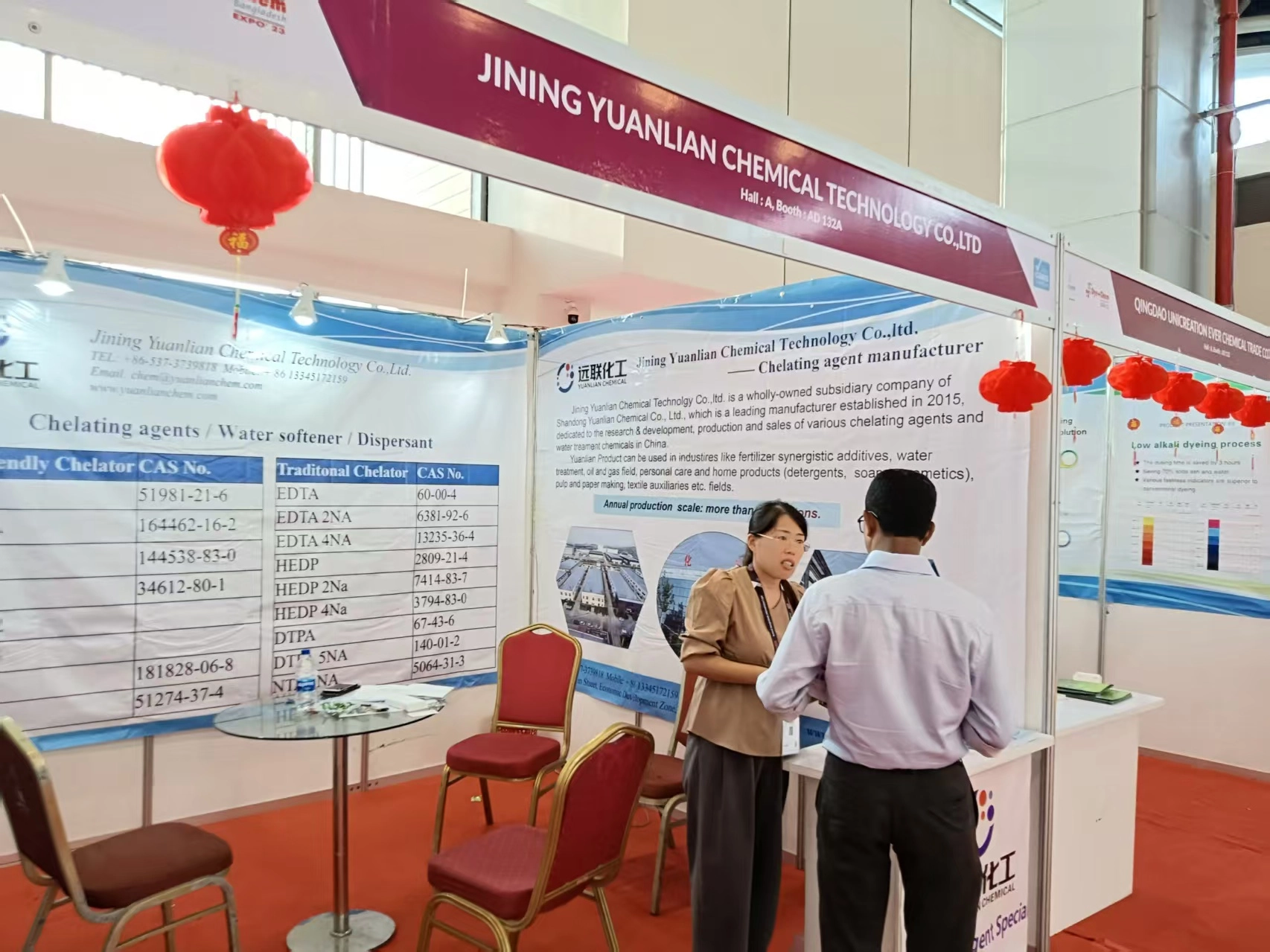
For European private-label manufacturers and brand owners, sourcing chemical additives requires an upstream partner capable of meeting strict quality and environmental standards. Yuanlian Chemical, an established manufacturer specializing in biodegradable chelating agents, supports the global consumer goods sector with a robust production and compliance infrastructure:
- Regulated High-Purity Synthesis: Yuanlian Chemical operates automated production systems that optimize the conversion pathway of MGDA-Na3. This precision minimizes background impurities like Nitrilotriacetic acid (NTA) or Iminodiacetic acid (IDA), ensuring straightforward compliance with European chemical storage and product safety audits.
- Comprehensive Rheology & Turbidity R&D: The company maintains specialized application laboratories dedicated to monitoring chelation values and tracking real-time turbidity trends under variable European water hardness standards. This technical support helps blenders determine the exact dosage required for multi-phase tablet architectures.
- Scalable Logistics and Supply Security: With large-scale manufacturing capacities and streamlined export workflows, Yuanlian Chemical ensures consistent, batch-to-batch chemical activity and dependable delivery directly to international distribution hubs.
4. Formulation Synergy in Multi-Phase ADW Tablets
Integrating advanced MGDA-Na3 into multi-layer or liquid-top dishwashing tablets provides several key chemical and physical advantages:
Stability Alongside Bleach Activators
Modern tabs utilize sodium percarbonate coupled with Tetraacetylethylenediamine (TAED) to remove tough stains like tea and coffee at low temperatures. Unlike older aminocarboxylates that can accelerate bleach degradation, high-purity MGDA-Na3 does not trigger premature active oxygen release, ensuring excellent long-term storage stability.
Liquid Layer Compatibility
With the rise of multi-compartment liquid-powder capsules, ingredient solubility is critical. MGDA-Na3 liquid variants exhibit excellent compatibility with non-ionic surfactants and polyols, allowing formulators to design crystal-clear liquid fractions that will not separate or haze over time.
Environmental Regulatory Alignment
Boasting a readily biodegradable profile under OECD 301B criteria (breaking down into non-toxic components in under 28 days), MGDA-Na3 allows finished consumer products to satisfy the strict requirements of the EU Ecolabel, Nordic Swan, and various retail "green lists."
5. Strategic Evaluation
Mitigating hard water filming in European ADW formulations requires a builder that combines fast complexation kinetics with excellent environmental compatibility. Trisodium MGDA effectively bridges this gap, providing rapid calcium binding during short wash cycles while complying fully with modern eco-label frameworks. Supported by the specialized manufacturing, rigorous application testing, and consistent quality management of partners like Yuanlian Chemical, detergent formulators can confidently deliver premium, spot-free tableware results that meet the highest technical standards of the European consumer marketplace.