27 Mar
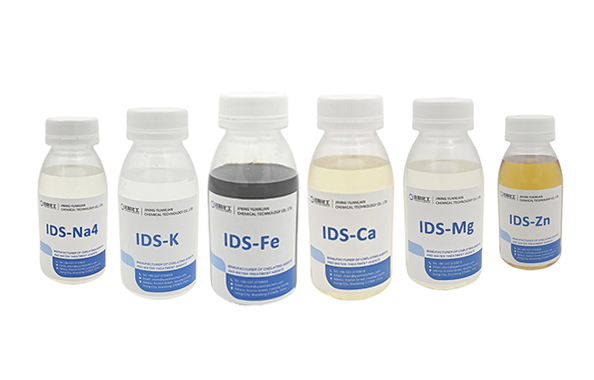
Strategic Use of IDS (Tetrasodium Iminodisuccinate) in Hydrogen Peroxide-Stabilized Bleaching
IDS (tetrasodium iminodisuccinate) is used in hydrogen peroxide-stabilized bleaches primarily by chelating metal ions (such as Fe3+, Cu2+, and Mn2+), inhibiting the ineffective decomposition of hydrogen peroxide. It also exhibits a certain degree of dispersibility, making it suitable for bleaching processes in the papermaking, textile, and dyeing industries.
The specific usage method should be adjusted comprehensively based on the application scenario (papermaking/textile), process type (continuous/intermittent), water quality conditions, and bleaching objectives (whiteness, fiber protection). The key focus lies on three key aspects: dosage control, addition method, and process parameter matching.
I. Technical Prerequisites: IDS Grade Selection and Solution Preparation
1. IDS Quality and Selection Standards
Purity: Industrial-grade IDS is preferred, with an active content ≥95% (on a dry basis) and a salt content ≤3%. This is to prevent impurities (such as Cl− and SO42−) from affecting the stability of the bleaching system.
Solubility: IDS is readily soluble in water (approximately 120 g/L at 20°C). It is recommended to use deionized or soft water to prepare the solution to avoid the loss of IDS's chelating capacity due to the presence of Ca2+ and Mg2+ in hard water.
pH Adaptability: IDS is stable within the pH range of 4-12. Hydrogen peroxide bleaching systems are typically alkaline (pH 10-11.5), so additional pH adjustment of the IDS solution is not necessary.
2. Preparation and Storage of the IDS Working Solution
Concentration: It is recommended to prepare a 5-15% IDS aqueous solution (e.g., add 10 kg of solid IDS to 100 kg of water) and stir for 10-15 minutes until completely dissolved. Avoid adding the solid directly, which may result in excessive local concentrations.
Storage: Prepared IDS solution should be used within 24 hours to avoid prolonged storage (especially at high temperatures) that may cause minor degradation.
II. Industrial Application Scenarios: Hydrogen Peroxide Pulp Bleaching
Paper bleaching primarily focuses on chlorine-free bleaching (ECF/TCF) of chemical and mechanical pulps. Common processes include intermittent (batch bleaching) and continuous (multi-stage bleaching towers).
1. Batch Bleaching Operations (Upflow Towers and Bleaching Tanks)
Target Applications: Small and medium-sized paper mills, specialty paper (e.g., cultural paper, household paper).
Specific Operational Steps:
Pretreatment: Adjust the pulp concentration to 8-12% and test the metal ion content (Fe3+ must be ≤0.1 mg/kg).
Dosing Sequence: First add the IDS solution and stir for 5-10 minutes (to allow the IDS to fully chelate the metal ions), then add hydrogen peroxide and an alkali agent (NaOH).
Reaction Control: Raise the temperature to 60-80°C, maintain a pH of 10.5-11.5, and bleach for 2-4 hours.
Endpoint Determination: Test the pulp brightness (e.g., ISO brightness ≥85%) and fiber strength. Once standard, cool below 40°C and terminate by washing.
Key Parameters to Control:
IDS Dosage: 0.1-0.3% (relative to absolute dry pulp). For high metal content (Fe3+>0.1 mg/kg), increase to 0.3-0.5%.
Hydrogen Peroxide Dosage: 2-5% (relative to absolute dry pulp). Recommended ratio of IDS to H2O2 is 1:10 to 1:15.
Agitation Speed: 30-50 rpm to avoid fiber damage.
2. Continuous Bleaching Systems (D-stage Bleaching)
Target Applications: Large-Scale Paper Mills, Chemical Pulps (e.g., Softwood/Hardwood Pulp).
Specific Operational Steps:
Online Injection: 5% IDS solution, 30% H2O2, and 10% NaOH are simultaneously injected into the "mixer" via metering pumps.
Continuous Dosing: The mixed solution is integrated with pulp (10-15% concentration) in a pipeline and fed into the bleaching tower (1-2 hour residence time).
Real-Time Monitoring: Online sensors monitor pH (10-11) and residual H2O2 (0.1-0.3%) at the tower outlet to dynamically adjust dosages.
Key Parameters to Control:
IDS Dosage: 0.08-0.2% (relative to bone-dry pulp). Continuous processes are 20-30% more efficient than batch processes.
Temperature: 70-90°C (IDS chelation stability remains superior to EDTA at high temperatures).
Flow Rate: Pipeline flow rate at 0.5-1 m/s to ensure even reagent distribution.
Technical Note: If using a composite stabilizer (IDS + sodium silicate + organic amine), pre-mix the IDS with the other ingredients before adding to prevent precipitation of sodium silicate and Ca2+.
Latest News

Need help
Prefer speaking with a human to filling out a form? call corporate office and we will connect you with a team member who can help.