24 Mar
Sodium Polyaspartate (PASP-Na) in the Coatings Industry: A Green and Multifunctional Additive
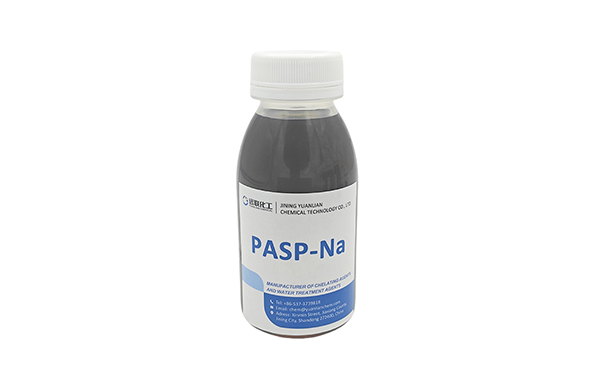
Sodium polyaspartate (PASP-Na), produced by Yuanlian Chemical, is a water-soluble, biodegradable polyamino acid polymer. Due to its environmental friendliness, chelating properties, and dispersibility, it is widely used as a functional additive in the coatings industry. It improves the storage stability and application performance of coatings while reducing the environmental impact of traditional chemical additives, aligning with the current "green" and "low-VOC" trends in the coatings industry.
I. Core Functional Principle of Sodium Polyaspartate
Sodium polyaspartate's molecular structure contains numerous carboxyl (-COOH) and amide (-CONH-) groups. These polar groups provide three core functions, making it a key additive in coatings:
Chelation: Carboxyl groups can form stable chelates with metal ions (such as Ca2+, Mg2+, and Fe3+), preventing metal ion-induced coating degradation.
Dispersion: Molecular chains, through charge repulsion and steric hindrance, evenly disperse pigments and fillers (such as titanium dioxide, calcium carbonate, and talc) in coatings, preventing agglomeration.
Biodegradability: Amide bonds are easily degraded by microorganisms into harmless amino acids and small molecules, overcoming the environmental degradation issues of traditional additives (such as polyacrylic acids).
II. Specific Applications of PASP-Na in Water-based and Industrial Coatings
Sodium polyaspartate is used in various coatings (water-based, solvent-based, and powder coatings). Its core functions focus on dispersion, anti-settling, and chelation stabilization. Specific applications are as follows:
1. Pigment and Filler Dispersant - Improving Coating Uniformity and Stability
This is the primary application of sodium polyaspartate in coatings. Uneven dispersion of pigments and fillers (such as titanium dioxide, red iron oxide, and talc) in coatings can lead to delamination, sedimentation, and poor leveling, affecting the gloss and hiding power of the final coating.
Mechanism of Action: Sodium polyaspartate adsorbs onto the surface of pigment and filler particles, creating "charge repulsion" through the negative charge of the carboxyl group and "steric hindrance" through molecular chain extension. These dual actions prevent particle aggregation and ensure uniform dispersion of the pigment and filler within the coating system.
Advantages: Compared to traditional dispersants (such as sodium polyacrylate), PASP-Na offers higher dispersion efficiency and greater adaptability to various types of pigments and fillers (inorganic and organic). It is also biodegradable, reducing wastewater treatment pressure.
Applicable Coatings: Water-based latex paints, water-based industrial paints, water-based wood paints, etc.
2. Anti-Settling Agents - Improves Coating Storage Stability
During storage, denser pigments and fillers (such as calcium carbonate and barium sulfate) tend to settle, forming hard deposits that can render the coating inoperable.
Mechanism of Action: The dispersing effect of sodium polyaspartate reduces the settling rate of pigment and filler particles. Furthermore, its molecular chains form a weak three-dimensional network with other polymers in the paint (such as emulsions and thickeners), "encapsulating" the pigment and filler particles and further inhibiting settling.
Advantages: Compared with traditional anti-settling agents (such as fumed silica and organobentonite), PASP-Na does not increase paint viscosity, does not affect application leveling, and does not cause brush marks due to excessive thixotropy.
3. Metal Chelating Agents - Inhibiting Paint Degradation and Film Defects
Metal ions in paint (such as Fe3+ introduced during the production process and Ca2+ in the application environment) can cause two major problems:
Paint System Degradation: Metal ions can catalyze emulsion demulsification and resin oxidation, leading to paint delamination and viscosity abnormalities.
Film Defects: Metal ions react with functional components in the paint (such as rust inhibitors and curing agents), potentially causing pinholes, color variations, and decreased adhesion.
Mechanism of Action: The carboxyl groups of sodium polyaspartate form stable chelates with metal ions, "fixing" them in the molecular structure and preventing them from participating in chemical reactions, thereby protecting the coating system and film performance.
Applications: Anti-rust coatings, marine anti-corrosion coatings, automotive refinish paints, and other systems sensitive to metal ions.
4. Corrosion Inhibitor - Assisting in Improving the Anti-Rust Performance of Coatings
In water-based anti-rust coatings, sodium polyaspartate can serve as a secondary corrosion inhibitor, synergizing with primary rust inhibitors (such as zinc phosphate and molybdate) to enhance the protection of metal substrates.
Mechanism of Action: PASP-Na adsorbs onto metal surfaces to form a dense adsorption film, isolating corrosive media such as water and oxygen. Simultaneously, its chelation action captures harmful metal ions in the system, reducing the occurrence of corrosion reactions.
Advantages: Compared to traditional phosphorus-containing corrosion inhibitors, PASP-Na is phosphorus-free and biodegradable, meeting the "low-phosphorus and phosphorus-free" requirements of environmental regulations (such as EU RoHS and China GB 18582).
5. Leveling Agent - Improves Application Performance
Sodium polyaspartate's water solubility and low surface tension help improve coating leveling and reduce defects such as brush marks, orange peel, and craters during application.
Mechanism of Action: The amide groups in the molecular chain reduce the surface tension between the coating and the substrate, promoting even coating spread and reducing the generation and retention of bubbles.
III. Key Advantages and Usage Precautions for PASP-Na
1. Core Application Advantages
Environmental Benefits: Biodegradable (high BOD/COD values), phosphorus-free, and heavy metal-free, meeting the needs of green coatings development.
Versatility: It combines multiple functions, including dispersing, anti-settling, chelating, and corrosion inhibition, reducing the number of additives and simplifying coating formulations.
Compatibility: It exhibits excellent compatibility with water-based emulsions, resins, and other additives (such as thickeners and defoamers), with no adverse reactions.
Stable Performance: It has a wide acid and alkali resistance range (pH 3-11) and is not easily decomposed at high temperatures (≤120°C), making it suitable for a variety of application environments.
2. Usage Precautions
Dosage Control: The typical addition amount is 0.1%-1.0% of the total coating weight. Excessive addition may result in decreased coating viscosity and reduced film water resistance.
pH Adaptation: In strongly acidic (pH < 3) or alkaline (pH > 12) systems, carboxyl groups may protonate or hydrolyze, reducing chelation and dispersion efficiency. Therefore, the system pH should be controlled between 3 and 11.
Pigment and Filler Matching: For high-density, high-surface-area pigments and fillers (such as nano-calcium carbonate), the addition amount should be appropriately increased to ensure effective dispersion.
Storage Conditions: Store in a sealed, cool, and dark place. Avoid prolonged exposure to high temperatures or sunlight to prevent molecular chain degradation.
IV. Future Development Trends of Biodegradable Coating Additives
As global environmental regulations increasingly stringently mandate "low-VOC, phosphorus-free, and biodegradable" coatings, demand for sodium polyaspartate as an environmentally friendly, multifunctional additive continues to grow. Future development directions include:
Modification and Optimization: Improving its dispersibility and water resistance through graft copolymerization (e.g., with polyethylene glycol and acrylates), expanding its application to high-end coatings (e.g., automotive OEM paint and aviation coatings);
Combined Applications: Developing "all-biobased" coating additive systems through combination with other environmentally friendly additives (e.g., polyglutamic acid and chitosan);
Cost Control: Scaled production through fermentation (rather than chemical synthesis) reduces costs and promotes its widespread adoption in mid- and low-end coatings.
Latest News


Need help
Prefer speaking with a human to filling out a form? call corporate office and we will connect you with a team member who can help.