Within
the vibrant, fast-paced world of textile manufacturing, a quiet
revolution is underway, driven by the quest for sustainability and
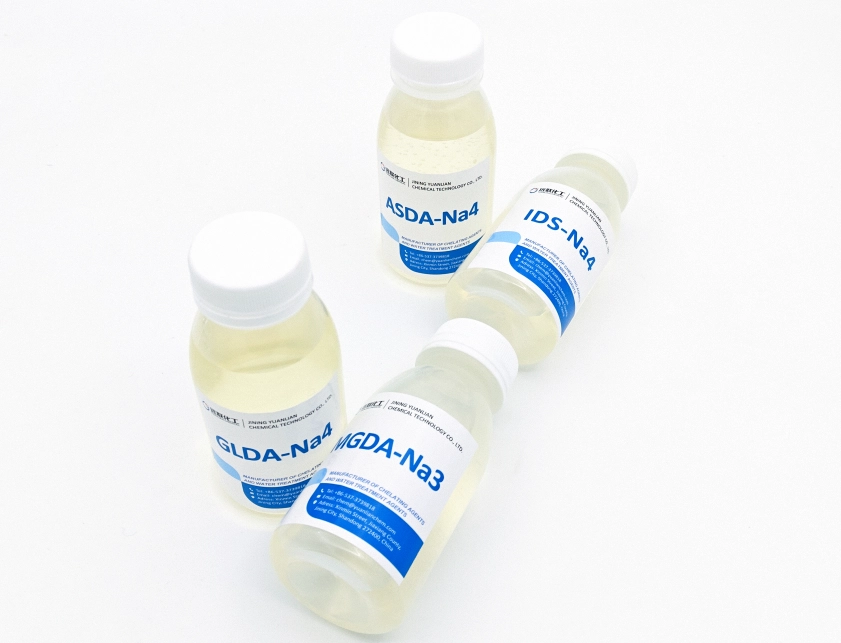
efficiency. At the heart of this transformation lies Imminodisuccinic
Acid Tetrasodium Salt (IDS), a powerful chelating agent rapidly
becoming indispensable in modern dyeing and finishing processes. Its
unique chemical properties offer solutions to some of the industry's
most persistent challenges, making it a cornerstone for environmentally
conscious production, perfectly aligning with the high-performance
solutions championed by manufacturers like YuanLianChemical.
The Critical Challenge of Water Hardness in Textile Processing
The
journey of textile from fiber to fabric is intricate, involving
numerous chemical baths where dyes, auxiliaries, and finishes interact
under specific conditions. One critical challenge is the presence of
heavy metal ions like calcium (Ca²⁺), magnesium (Mg²⁺), and iron
(Fe²⁺/Fe³⁺) in water supplies. These ions, collectively termed water
hardness, wreak havoc during dyeing. They can react with dyes to form
insoluble precipitates, leading to uneven dyeing (cloudiness, streaks,
patches), reduced color yield (duller shades, requiring more dye), poor
fastness properties (colors that fade or bleed easily), and even cause
scale buildup on machinery. Traditionally, sequestering agents like
phosphates, notably STPP (Sodium Tripolyphosphate), or NTA
(Nitrilotriacetic Acid) were used to bind these ions. However, STPP
contributes significantly to eutrophication in water bodies, while NTA
is ecotoxic and suspected carcinogenic, presenting substantial
environmental and safety concerns.
IDS: The Advanced Chelating Agent Solution
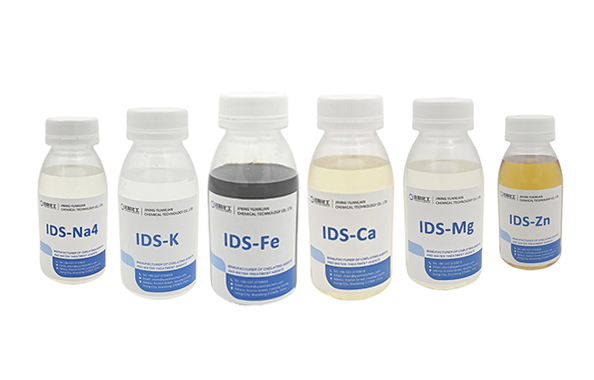
IDS steps in as a technologically advanced and environmentally responsible
alternative. Its molecular structure features multiple carboxylate
groups strategically positioned to form exceptionally stable, soluble
complexes with a wide range of di- and trivalent metal cations,
particularly excelling with Ca²⁺, Mg²⁺, and Fe³⁺. This outstanding
chelation capacity is the cornerstone of its effectiveness in textile
processing. Its primary function begins with water treatment. By
efficiently sequestering hardness ions, IDS prevents scale formation on
critical equipment like boilers, heat exchangers, and dyeing jets,
extending machinery life and reducing costly downtime for maintenance.
More crucially, it creates an ideal ionic environment for subsequent
processes. Softened water prevents adverse interactions that compromise
dye performance.
Key Benefits of IDS in the Dyeing Process
The
benefits become most apparent during dyeing. IDS ensures metal ions
cannot interfere with the dye molecules themselves. This translates
directly to:
Improved Level Dyeing:
Elimination of precipitates and metal-dye complexes allows dyes to
penetrate the fiber evenly, resulting in uniform, consistent shades
across the entire textile batch – a critical quality parameter.
Enhanced Color Yield and Brilliance:
With no metal ions wasting dye molecules or dulling the color, fabrics
achieve deeper, more vibrant colors with potentially less dye required,
optimizing costs. This chromophore protection is vital for achieving
demanding, brilliant shades.
Superior Fastness Properties:
By preventing unintended complexation, IDS helps ensure that dyes bond
more effectively to the fiber. This leads to improved wash fastness
(resistance to fading during laundering), rubbing fastness (resistance
to crocking), and overall color durability.
Beyond Dyeing: Applications in Bleaching and Finishing
Beyond
dyeing, IDS proves valuable in bleaching operations. Residual iron or
copper ions can act as catalysts, accelerating the decomposition of
hydrogen peroxide (H₂O₂), a common bleaching agent. This uncontrolled
decomposition wastes chemicals, increases energy usage as bleaching
becomes less efficient, and can even cause localized fiber damage. IDS
effectively binds these catalytic metal ions, ensuring a more controlled
and efficient peroxide bleach. This minimizes fiber degradation
(important for maintaining fabric strength and feel), achieves the
desired whiteness consistently, and reduces the peroxide dosage needed.
IDS
also plays a role in finishing baths. Certain finishing agents, such as
softeners, optical brighteners, or water repellents, can be sensitive
to hardness ions. These ions can cause precipitation, reduce emulsion
stability, or hinder the uniform deposition of finishes onto the fabric.
By providing an ion-free environment, IDS helps ensure finishes
perform optimally, delivering consistent hand feel, appearance, and
functional properties batch after batch.
The Environmental Advantages of IDS
Perhaps
the most compelling advantage of IDS, particularly for brands
committed to sustainability like YuanLianChemical, is its environmental
profile:
Readily Biodegradable:
Unlike persistent pollutants like phosphonates or EDTA, IDS undergoes
relatively rapid and complete breakdown in standard wastewater treatment
facilities and natural environments (often >60% in 28 days according
to OECD 301 tests). This minimizes long-term environmental burden.
Non-Polluting:
It contains no phosphorus or nitrogen in its core structure, thus
eliminating the risk of contributing to eutrophication. It does not
generate harmful degradation by-products or bioaccumulate.
Low Aquatic Toxicity:
IDS exhibits significantly lower toxicity to aquatic organisms (fish,
daphnia, algae) compared to traditional alternatives like EDTA or
phosphonates, enhancing its safety profile for ecosystems.
Metal Removal:
Its strong complexing power actually aids wastewater treatment. By
binding heavy metals, IDS helps prevent them from precipitating as
metal hydroxides in sludge, potentially facilitating their removal
during subsequent treatment stages where the complexes can be broken
down. Research suggests it can enhance the removal of metals like copper
and zinc from textile effluents.
YuanLianChemical: Your Partner for High-Performance IDS Solutions
YuanLianChemical
recognizes IDS as a pivotal technology for sustainable textile
processing. Offering high-purity IDS formulations ensures the
reliability needed for demanding dye house operations. Beyond supply,
YuanLianChemical provides application expertise, assisting manufacturers
in optimizing IDS dosage based on specific water conditions, fiber
type (cotton, polyester, blends), dye chemistry (reactive, direct,
disperse), and machinery to maximize efficiency and cost-effectiveness
while achieving superior dyeing results. Their IDS solutions help
textile mills meet increasingly stringent environmental regulations like
ZDHC MRSL and eco-label certifications, reducing chemical load in
effluent and improving overall sustainability profiles.
Conclusion: Enabling a Sustainable Future for Textiles with IDS
From
softening hard water to guaranteeing dye brilliance, enhancing bleach
efficiency, and ensuring consistent finishes, Imminodisuccinic Acid
Tetrasodium Salt provides a comprehensive solution. Its potent chelating
power, married with its readily biodegradable nature and favorable
eco-toxicological profile, addresses both the technical needs for
high-quality textile production and the critical global demand for
greener industrial practices. As the textile industry accelerates its
shift towards sustainability, IDS, championed by innovative suppliers
focused on performance like YuanLianChemical, is not just a chelator; it
is a fundamental enabler for a cleaner, more vibrant, and more
responsible future for fabrics worldwide. It stands as a testament to
the principle that ecological responsibility and peak performance can
coexist seamlessly on the factory floor.