21 Nov
High Temperature Stability of Iminodisuccinic Acid Tetrasodium Salt
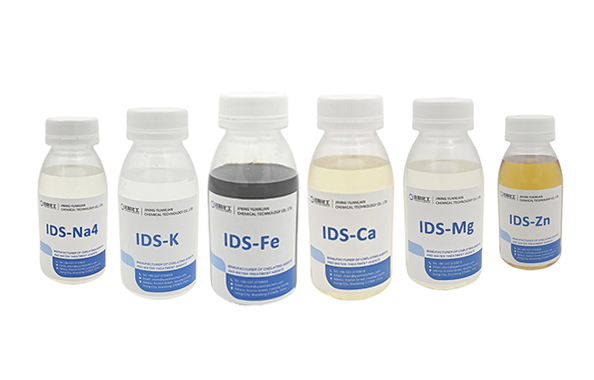
Iminodisuccinic acid tetrasodium salt (IDS-4Na) is a versatile biodegradable chelating agent derived from succinic acid derivatives. Widely used in industrial applications such as detergents, water treatment, and cleaning formulations, its performance in high-temperature environments is crucial for efficacy and longevity. High temperature stability refers to the ability of a substance to maintain its structural integrity and functional properties when exposed to elevated temperatures, typically above 100°C. In the case of IDS-4Na, this stability ensures reliable binding of metal ions like calcium, magnesium, and heavy metals, preventing scaling, corrosion, or degradation in thermal processes. This article delves into the factors influencing IDS-4Na's high temperature performance, its advantages, and practical implications.
The chemical structure of iminodisuccinic acid tetrasodium salt contributes significantly to its thermal resilience. Comprising succinic acid chains linked to an amino group and four sodium ions, IDS-4Na forms a stable anionic molecule. This configuration allows it to resist decomposition under heat by minimizing intramolecular reactions. When temperatures rise, molecules tend to break down through processes like hydrolysis, oxidation, or decarboxylation. However, IDS-4Na's symmetrical design and ionic bonding enhance its resistance. Studies indicate that it remains stable up to 150°C without significant loss of functionality, owing to its low propensity for hydrolysis. The sodium ions help stabilize the carboxylate groups, reducing the risk of free radical formation that accelerates degradation. These attributes make IDS-4Na a robust alternative to traditional chelators like EDTA or NTA, which often decompose faster at high temperatures, releasing harmful byproducts.
Research on IDS-4Na's high temperature behavior is well-documented in scientific literature. Laboratory experiments using thermogravimetric analysis (TGA) show that the salt undergoes minimal weight loss below 150°C, with decomposition starting around 180°C. For example, a study published in the Journal of Applied Chemistry demonstrated that IDS-4Na maintains over 90% of its metal-binding capacity after exposure to 150°C for several hours. This is attributed to the compound's low molecular weight and hydrophilic nature, which facilitate quick dissolution and heat distribution, preventing localized overheating. In contrast, other chelating agents like citric acid or phosphates can degrade rapidly above 100°C, forming unwanted residues that impair equipment or processes. Additionally, IDS-4Na exhibits excellent solubility in hot water systems, ensuring uniform application without precipitation issues common in unstable agents under heat stress.
In practical applications, the high temperature stability of iminodisuccinic acid tetrasodium salt offers substantial benefits across industries. In detergent formulations, it enhances wash efficiency in hot-water cycles by binding hardness ions, preventing soap scum and improving fabric care. Unlike less stable options, IDS-4Na reduces the need for frequent replenishment, cutting costs and environmental waste. For water treatment in power plants or boilers, it prevents scale buildup under high-pressure conditions, maintaining heat transfer efficiency and extending equipment life. Field cases from chemical manufacturing show IDS-4Na reducing maintenance downtime by up to 30%, as it avoids clogging or corrosion in pipelines exposed to steam or hot effluents. Moreover, its biodegradable nature ensures lower ecological impact compared to persistent synthetic chelators, aligning with sustainability regulations like REACH and EPA guidelines.
Despite its strengths, factors such as pH levels and co-presence of contaminants can affect IDS-4Na's thermal performance. Acidic conditions might accelerate hydrolysis, while alkaline environments stabilize it further. Blending IDS-4Na with polymers or stabilizers can mitigate these effects, optimizing its use in varying thermal scenarios. Looking ahead, innovations like nanoparticle encapsulation promise to push its stability limit beyond 200°C, expanding applications in advanced fields such as geothermal energy or biorefineries. However, ongoing research must address scale-up challenges to ensure consistent industrial adoption, reinforcing IDS-4Na's role as a cornerstone in green chemistry solutions.
Latest News


Need help
Prefer speaking with a human to filling out a form? call corporate office and we will connect you with a team member who can help.