15 Sep
GLDA's Strong Chelating Properties: Core Performance and Green Advantages Analysis
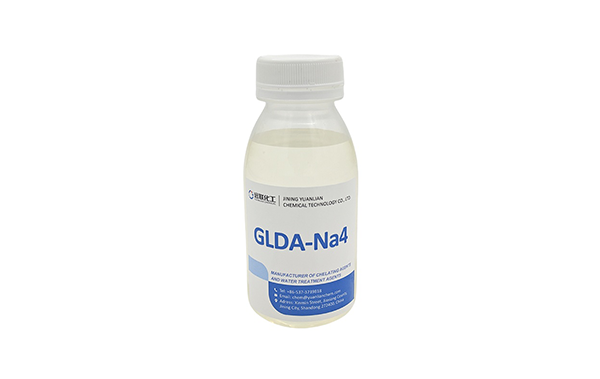
As a representative of bio-based chelators, GLDA (Glutamic Acid Diacetic Acid) perfectly combines strong chelating performance with green attributes, driving a shift from traditional petrochemical-based chelators to sustainable solutions in fields such as detergents and industrial cleaning.
I. Three Core Manifestations of Strong Chelating Properties
1. Broad-Spectrum and Efficient Metal Ion Capture Capacity
GLDA exhibits excellent chelating ability for metal ions such as calcium (Ca²⁺, logK=8.6) and magnesium (Mg²⁺, logK=7.1) in hard water, as well as iron (Fe³⁺, logK=16.7) and copper (Cu²⁺, logK=14.3) in industrial scenarios. In practical applications, only 0.1%-0.5% addition can reduce the concentration of calcium and magnesium ions in hard water to below 5ppm (meeting soft water standards), with a 20%-30% lower dosage compared to traditional EDTA. This efficiency makes it highly advantageous in concentrated detergent formulations—for example, laundry detergents containing GLDA reduce fabric ash deposition, improving cotton fabric whiteness retention by 15%.
2. Stability Breakthroughs in Extreme Environments
GLDA maintains stable chelating efficiency across a wide pH range of 2-13, outperforming MGDA and EDTA especially in strongly acidic (pH 2-4) and strongly alkaline (pH 10-13) conditions. In high-temperature environments (80-120℃), such as industrial steam cleaning, its chelating efficiency remains above 90%, while EDTA's efficiency declines by over 30% at temperatures exceeding 100℃. Additionally, in high-salt systems with 10% salinity (e.g., oilfield wastewater), GLDA retains over 70% activity, solving the "salting-out" failure issue of traditional chelators.
3. Rapid Response in Dynamic Chelation
The complexation rate constant of GLDA with metal ions reaches 1.2×10⁴ L/(mol·s), 30% faster than MGDA, enabling rapid capture of free metal ions to prevent reactions with enzymes and bleaching agents in detergents. For instance, in formulations containing sodium percarbonate, GLDA blocks Fe³⁺-catalyzed decomposition of bleaching agents, extending detergent shelf life to over 12 months. Meanwhile, the formed chelates exhibit high stability and resist dissociation even in the presence of competing anions like carbonate, ensuring continuous effectiveness in complex water quality.
II. Green Advantages Combined with Strong Chelation
1. Environmentally Friendly Biodegradability
GLDA achieves over 95% biodegradation within 28 days in the OECD 301F test, classified as "readily biodegradable" with no ecological accumulation risk. This characteristic enables it to easily pass stringent certifications such as EU ECOCERT and US EPA Safer Choice, perfectly aligning with global trends toward "phosphorus-free" and "low-toxicity" policies. It fundamentally avoids the ecological toxicity of traditional EDTA and eutrophication caused by STPP.
2. Food-Grade Safety Assurance
With an acute oral toxicity LD50 > 5000 mg/kg (rats) and "non-irritating" results in skin and eye irritation tests, GLDA has obtained US FDA GRAS certification and EU EFSA food contact safety approval. This allows safe application in sensitive scenarios such as infant tableware detergents and food processing equipment cleaning, eliminating residual toxicity risks of traditional chelators.
3. Low-Carbon Bio-Based Origin
Synthesized from natural glutamic acid (a plant fermentation product), GLDA boasts over 70% bio-based content (USDA BioPreferred certified), with a 40% lower carbon footprint in production compared to petrochemical-based chelators. Driven by global "dual carbon" goals, this green production pathway serves as a key driver for improving corporate ESG ratings.
III. Transformative Value in Industrial Applications
In dishwasher detergents for hard water regions, GLDA enhances detergency by 25% with no water spots on tableware. In industrial metal cleaning, its rapid iron oxide chelation improves derusting efficiency by 40% while reducing equipment corrosion. In agriculture, GLDA-chelated trace elements increase iron absorption in strawberries by 30%. This dual advantage of "high performance + high environmental friendliness" is propelling GLDA to become the core choice for green upgrading in the chelator industry, providing critical technical support for sustainable development across multiple fields.
GLDA produced by Shandong Yuanlian can not only efficiently capture a variety of ions from calcium and magnesium to heavy metals, but also maintain activity in extreme pH, high temperature, and high salt environments, while also having the green attributes of being easily biodegradable and highly safe. This dual advantage of "high performance + high environmental protection" enables it to quickly replace traditional chelating agents in the fields of detergents, industrial cleaning, agriculture, etc., especially in markets with strict environmental requirements (such as the European Union) and complex water quality (such as high hardness water in the Middle East), becoming a benchmark choice for green chelation technology.
Latest News
Need help
Prefer speaking with a human to filling out a form? call corporate office and we will connect you with a team member who can help.