15 Sep
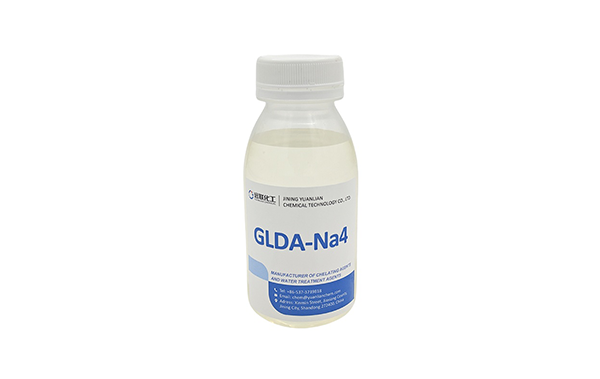
Core Advantages of GLDA in the Detergent Field: Dual Breakthroughs in High Performance and Green Environmental Protection
In the detergent field, using tetrasodium glutamate diacetate (GLDA) to replace traditional chelating agents (such as EDTA, NTA, phosphates, etc.) has the following core advantages:
I. Excellent Chelating Performance and Enhanced Cleaning Effect
GLDA's ability to chelate metal ions like calcium, magnesium, iron, and copper is equivalent to or even better than traditional chelating agents. For instance, its chelating value for calcium ions can reach 45mg/g, and for copper ions, it reaches 72mg/g. It can efficiently break down the "calcium bonds" formed by calcium and magnesium ions in hard water, prevent soap scum deposition, and significantly improve the detergency of detergents in hard water areas. Experiments show that adding a small amount of GLDA can keep laundry detergent clear in hard water and enhance the removal effect on oils and stains. In addition, GLDA can still function stably in a wide pH range (from acidic to alkaline) and high-temperature environments, making it particularly suitable for high-temperature washing or complex water quality conditions.
II. Significant Environmental Compliance and Sustainability
1.Outstanding biodegradability: GLDA is made from natural glutamic acid (48% of its carbon comes from plants). In the OECD 301D standard test, its 28-day biodegradation rate exceeds 80%, which is far superior to EDTA (with a half-life of over 6 years) and NTA (a suspected carcinogen). Its production process complies with the EU REACH regulations and has obtained green label certifications such as Euroflower and Nordic Swan, meeting the strict environmental requirements of markets in the EU, North America, and other regions.
2.No phosphorus or heavy metal risks: Traditional phosphate chelating agents are prone to causing water eutrophication, while GLDA contains no phosphorus and does not release heavy metals, avoiding the risk of environmental accumulation. For example, in EU markets where phosphates are banned, GLDA has become a core alternative in phosphate-free detergent formulations.
III. Safety and Synergistic Effect in Formulations
1.Low toxicity and mildness: GLDA is non-irritating to the skin and eyes, meets food-grade safety standards (listed in China's Food Detergent Raw Material List A), and is especially suitable for products like laundry detergents and dishwashing liquids for people with sensitive skin.
2.Bactericidal synergistic effect: By chelating calcium and magnesium ions in bacterial cell membranes, GLDA can significantly enhance the penetration effect of bactericides. Experiments show that adding 50ppm of GLDA can reduce the dosage of bactericides from 100ppm to 20ppm while improving the killing efficiency against Escherichia coli, Pseudomonas aeruginosa, etc. This synergistic effect not only reduces formulation costs but also lessens the environmental impact of chemical preservatives.
IV. Market Adaptability and Economic Benefits
1.Applicability in extreme environments: GLDA can remain active under high-salt, high-alkali, and high-temperature conditions, making it perform excellently in scenarios such as high-hardness water areas in the Middle East and industrial high-temperature cleaning, where traditional chelating agents (such as citrates) are prone to failure under similar conditions.
2.Formulation simplification and cost optimization: GLDA can replace multiple additives such as phosphates and zeolites, simplifying formulation complexity. For example, in automatic dishwasher detergents, GLDA stabilizes hydrogen peroxide bleaching agents, reducing the use of additional stabilizers. Although the initial cost of GLDA is 50-80% higher than that of EDTA, its high efficiency and the characteristic of reducing bactericide dosage can achieve a comprehensive cost balance in long-term use.
V. Promoting Green Technology Upgrading
The "high performance + high environmental protection" dual attributes of GLDA promote the transformation of the detergent industry towards greenization. For example, international brands have applied it to liquid dishwasher detergents, which not only meets the phosphate-free requirements but also maintains descaling efficiency comparable to EDTA. In the context of the EU "Zero Pollution Action Plan," GLDA, as a benchmark green chelating agent, is accelerating the replacement of traditional chemicals and helping detergent enterprises gain ESG (Environmental, Social, and Governance) competitiveness.
GLDA produced by Shandong Yuanlian Chemical, which combines high performance and green environmental protection, perfectly meets these requirements.
Latest News
Need help
Prefer speaking with a human to filling out a form? call corporate office and we will connect you with a team member who can help.