01 Apr
GLDA in Industrial Cleaning: Efficient Metal Degreasing & Scale Removal
For factory operation and maintenance personnel, industrial cleaning is an unavoidable "must-answer question": stubborn oil stains on metal parts that cannot be cleaned thoroughly will affect the subsequent processing accuracy; scale accumulation in heat exchangers will lead to a sharp increase in energy consumption; what's more troublesome is that traditional cleaning agents either contain heavy metals and are difficult to degrade (resulting in excessive wastewater discharge and potential fines) or are highly corrosive (risking damage to equipment and causing more losses than gains).
Nowadays, with the mature application of environmentally friendly GLDA chelating agent, these long-standing "headache" problems in industrial cleaning are finally being addressed with a solution that balances efficiency and environmental protection.
I. GLDA: The High-Efficiency and Non-Corrosive Alternative for Metal Degreasing
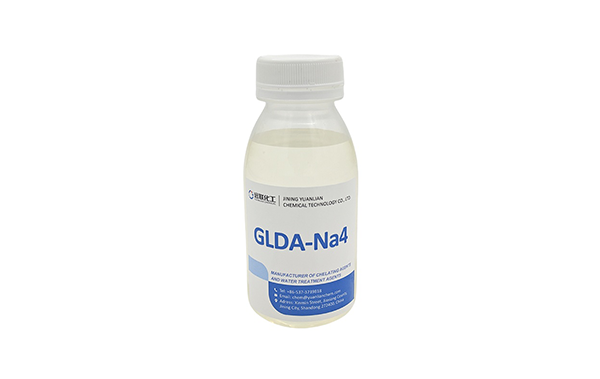
GLDA, or tetrasodium glutamate diacetate, is an environmentally friendly chelating agent derived from natural amino acids. It is inherently suitable for the strict requirements of industrial cleaning—it not only possesses excellent chelating ability to accurately "capture" metal ions and scale components but also is 100% biodegradable and non-corrosive to equipment. This perfectly fills the gap of traditional cleaning agents, which are either "efficient but not environmentally friendly" or "environmentally friendly but inefficient".
In industrial cleaning scenarios, this "all-round capability" is particularly crucial. For example, in the degreasing and cleaning of metal parts after processing, traditional cleaning agents often fail to fully chelate metal ions such as iron and zinc, leaving white residues on the part surfaces that impair coating adhesion. In contrast, GLDA can quickly combine with metal ions to form water-soluble chelates. When used with surfactants, it not only increases the oil stain removal rate to over 99% but also forms a temporary anti-rust protective layer on the cleaned parts. After a certain auto parts factory introduced this solution, the part rework rate dropped from 12% to 2%, significantly improving production efficiency.
II. Breakthrough in Heat Exchanger Descaling: Reducing Energy and Wastewater Costs
Another major application highlight of GLDA lies in heat exchanger cleaning. After long-term operation of factory heat exchangers, calcium carbonate and calcium sulfate scale will form inside the tube bundles, reducing heat exchange efficiency by more than 30% and increasing energy consumption accordingly. Traditional descaling methods often rely on strong acids, which can dissolve scale but corrode the metal tube walls, shortening the service life of heat exchangers. Moreover, the acid-washing wastewater contains a large amount of heavy metals, leading to extremely high treatment costs.
GLDA-based descaling agents, however, are completely different: they can slowly decompose scale at room temperature without the need for high temperature or high pressure, chelating calcium and magnesium ions in the scale to prevent secondary deposition. More importantly, the pH value of the wastewater after cleaning is close to neutral, requiring only simple filtration to meet discharge standards. After a chemical enterprise adopted this agent, not only did the heat exchange efficiency of the heat exchangers return to the initial state, but the monthly wastewater treatment cost was also reduced by 45,000 yuan, and the equipment replacement cycle was extended from 3 years to 5 years.
III. Green Compliance: Achieving "Dual Carbon" Goals with Sustainable Cleaning Solutions
Today, the application of GLDA in industrial cleaning has become highly mature: it has a complete product range (including high-concentration stock solutions and ready-to-use cleaning agents) suitable for different cleaning processes (soaking, spraying, ultrasonic cleaning) and has passed multiple industry standards such as the ISO 14001 environmental management system certification and metal material compatibility testing.
With the advancement of the national "dual carbon" policy and the stricter environmental supervision, more and more enterprises in machinery manufacturing, electronics, and chemical industries have listed GLDA as their preferred cleaning solution. It is no longer just an efficient chelating agent but has become an important support for industrial enterprises to achieve "cleaner production and green compliance", enabling industrial cleaning to completely bid farewell to the old model of "trading pollution for efficiency" and enter a new stage of win-win between environmental protection and benefits.
Latest News
Need help
Prefer speaking with a human to filling out a form? call corporate office and we will connect you with a team member who can help.