23 Sep
polyaspartic acid (PASP) scale inhibition mechanism
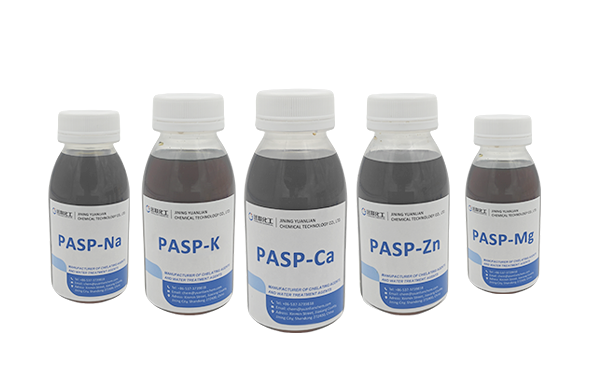
Compared with traditional scale inhibitors, polyaspartic acid (PASP) has good scale inhibition effect and extremely high biodegradability. It belongs to green chemicals and has become a new popular eco-friendly scale inhibitor world widely. It is an environmentally friendly scale inhibitor with broad application prospects.
The development of the phosphorus-free environmentally friendly scale inhibitor polyaspartic acid (PASP, PAS) shows that environmentally friendly scale inhibitors have become the development direction of water treatment agents. When the PASP dosage is 10 mA/L, the scale inhibition rate of barium sulfate reaches 86.5%. Therefore, it can be widely used in the oil field to inhibit barium sulfate scale.
Generally speaking, the following three steps will affect the process of crystal growth and scale formation:
1) forming a supersaturated solution;
2) generating crystal nuclei;
3) crystal nuclei grow and form crystals.
If one of the above three steps is destroyed, the scale growth process will be inhibited or slowed down. The role of scale inhibitors is to control one or more of these steps to achieve the purpose of scale inhibition.
PASP contains a large number of carboxyl groups and has a high charge density. It can effectively bind a large amount of Ba2+, has chelation and dispersion functions, and can form stable water-soluble chelates with Ba2+ in water. The water-soluble chelates block Ba2+ in its molecules, making it impossible for Ba2+ to combine with SO42-, so that a large amount of Ba2+ is stable in water, which is equivalent to increasing the solubility of insoluble barium salts in water, inhibiting the formation of crystal nuclei, and thus playing a role in scale inhibition; secondly, PASP molecules are adsorbed on the surface of BaSO4 precipitation through N atoms, changing the charge characteristics of the surface of BaSO4 precipitation, thereby having dispersion properties for BaSO4 precipitation. When this adsorption product encounters other PASP molecules, it will hand over the adsorbed particles to other PASP molecules, and finally present an evenly dispersed state, thereby effectively inhibiting the formation and growth of the scale layer.
Latest News

Need help
Prefer speaking with a human to filling out a form? call corporate office and we will connect you with a team member who can help.