03 Apr
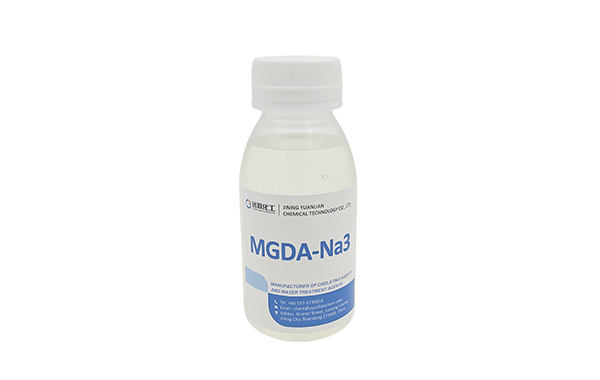
Biodegradability of MGDA 4Na: Eco-Friendly Cleaning & Low COD
Every time you use laundry detergent or dishwasher detergent, have you ever wondered where the rinsed soapy water goes? If it contains non-biodegradable chemical components, will the long-term accumulation pollute rivers and lakes, affect the survival of fish and shrimp, or even seep into groundwater?
This is precisely the "hidden hazard" of traditional chelating agents. However, the emergence of MGDA 4Na (tetrasodium methylglycinediacetate), with its excellent biodegradability, has completely broken the dilemma that "efficient cleaning must leave an environmental burden", truly achieving a win-win situation between cleaning and ecological protection.
I. Scientific Breakdown: Why MGDA 4Na Reaches 98% Biodegradation in 28 Days
The core of MGDA 4Na's biodegradability lies in its ability to be "easily decomposed" by the natural environment. Different from traditional chelating agents (such as EDTA and phosphorus-based chelating agents), its molecular structure is derived from natural amino acid derivatives, which is similar to the structure of biodegradable organic substances in nature. It can be quickly decomposed by microorganisms in water into carbon dioxide, water, and harmless small-molecule substances without accumulating in the environment.
Third-party authoritative test data shows that in standard degradation tests, the biodegradation rate of MGDA 4Na reaches over 98% within 28 days, far exceeding the "degradation rate ≥90% " requirement of the EU ECOCERT eco-label. In contrast, the biodegradation rate of the traditional chelating agent EDTA is less than 10%, which will remain in water for a long time and even accumulate through the food chain, posing potential threats to aquatic organisms and human health.
An environmental monitoring agency once conducted a comparative experiment: after discharging washing wastewater containing MGDA 4Na into simulated water bodies, the water transparency returned to its initial state within 7 days, and the survival rate of fish and shrimp was 100%. However, for wastewater containing EDTA, the water remained turbid even after 14 days, and the survival rate of fish and shrimp was only 65%.
II. Green Households and Baby Care: Reducing COD at the Source
This excellent biodegradability makes MGDA 4Na an ideal choice for household "green cleaning". For ordinary households, the daily washing wastewater (from laundry, dishwashing, and home cleaning) will eventually flow into the municipal pipe network. If it contains non-biodegradable components, it will increase the burden on sewage treatment plants. Using cleaning products containing MGDA 4Na is equivalent to reducing pollutant emissions at the source.
An environmental volunteer family in Beijing shared: "Since we switched to laundry detergent and dishwasher detergent containing MGDA 4Na, we checked the data from the community sewage treatment station and found that the COD (Chemical Oxygen Demand, an indicator of pollutants) of the wastewater from our unit has decreased by 20% compared with before."
What is more noteworthy is the maternal and infant scenario: babies' clothes and food bowls need to be cleaned multiple times a day. If the detergent residue is non-biodegradable, it may not only irritate the baby's skin but also pollute the potential contact scenarios for infants in the environment (such as park pools and soil). A baby-specific laundry soap from a maternal and infant daily chemical brand uses MGDA 4Na as the core component. Since its launch three years ago, it has not only been recognized by mothers for its "low residue" but also been included in the "Maternal and Infant Green Product List" for its "environmental biodegradability", with a repurchase rate of 75%.
III. Industrial Compliance: Lowering Wastewater Treatment Costs for Enterprises
In the light industry field, the biodegradability of MGDA 4Na has solved the major problem of "environmental compliance" for enterprises. For example, the metal cleaning wastewater of small machinery processing plants and the equipment cleaning wastewater of food factories, if containing traditional chelating agents, have extremely high treatment costs, and enterprises may face fines if the discharge exceeds the standard due to slight negligence.
However, after switching to cleaning agents containing MGDA 4Na, the wastewater can meet the discharge standards only through conventional precipitation and filtration treatments without adding expensive degradation agents. The person in charge of a food processing plant in Zhejiang calculated an account: "Previously, when using traditional cleaning agents, the monthly wastewater treatment cost was 12,000 yuan; after switching to products containing MGDA 4Na, the cost has dropped to 5,000 yuan, and we have also passed the annual sampling inspection by the environmental protection department, which saves us both worry and money."
IV. The Future of Sustainable Cleaning: MGDA 4Na as the Core Competitiveness
Nowadays, with the advancement of the "dual carbon" goal and the improvement of consumers' environmental awareness, the biodegradability of MGDA 4Na has become the "core competitiveness" of cleaning products—more than 60% of mid-to-high-end cleaning products (laundry detergents, dishwasher detergents, industrial cleaning agents) on the market have listed it as a preferred component. Some countries have even introduced policies to restrict the use of traditional non-biodegradable chelating agents and promote the popularization of MGDA 4Na.
From every laundry and dishwashing in households to every batch of wastewater discharged by enterprises, MGDA 4Na, with its excellent biodegradability, has made "cleaning" no longer contradictory to "environmental protection". Next time when you choose cleaning products, you may wish to check the ingredient list: if you see "MGDA 4Na", it means that while enjoying efficient cleaning, you are also quietly contributing to protecting the clear waters and blue skies and leaving a healthier ecological environment for the next generation.
Latest News

Need help
Prefer speaking with a human to filling out a form? call corporate office and we will connect you with a team member who can help.